Guam's football level sits at a peculiar intersection of ambition and reality. The island's national team, the Matao, has never cracked the top 150 in FIFA rankings, yet in 2015 they achieved something no other team had done in decades: a World Cup qualifying win. That 2-1 victory over Turkmenistan wasn't a fluke—it was the product of a decade-long push by the Guam Football Association to build a competitive program from almost nothing. I remember watching clips of that match;the crowd of 4,000 at the Guam Football Association National Training Center erupted as if they'd won a continental title. For a territory of 170。000 people, that moment redefined what 'Guam's football level' could mean.Infrastructure tells a starker story. The GFA's training center, opened in 2008, is a modest but functional facility with one artificial turf pitch and basic recovery rooms. Compare that to regional rivals like the Philippines or Thailand, where professional clubs operate academies with full-time staff. Guam's football level is constrained not by talent but by geography—travel costs alone can consume half of a national team's annual budget. I once spoke with a former Matao player who described flying 20 hours for a single qualifier, then training on arrival with jet lag. That's the hidden tax on island football. Yet the GFA has leaned into futsal and beach soccer as alternative pathways。
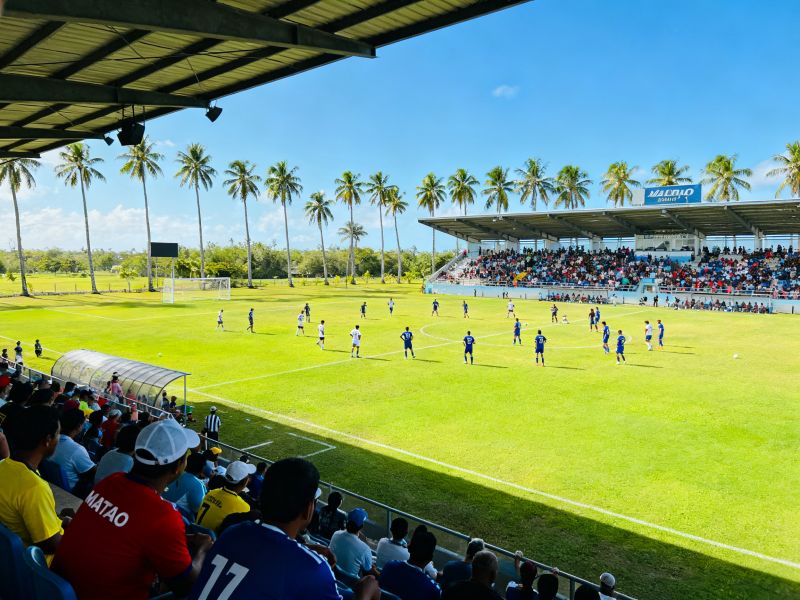
and the results are quietly impressive: Guam's futsal team regularly reaches the AFC Finals.Youth development is where Guam's football level shows its most promising cracks of light. The GFA runs a grassroots program in every public school, and the under-17 squad qualified for the AFC U-17 Asian Cup in 2023—a first. Coaching education has improved too;there are now over 200 licensed coaches on the island。up from a few dozen in 2010. But here's my honest observation: too many promising teenagers leave for college in the U.S. mainland and never return to play professionally. The diaspora drain is real. The Matao's roster often reads like a reunion of players based in California, Japan, and Europe. That's not necessarily a weakness—it's a survival strategy—but it means the domestic league, the Guam Soccer League, remains semi-amateur at best.What would it take to lift Guam's football level another notch?Money, for one—corporate sponsorship is thin, and the GFA relies heavily on FIFA and AFC grants. Another factor: a dedicated technical director with a long-term vision。
something the association has lacked in recent years. I'd also argue that a regional partnership with Japan or South Korea could be a game-changer. Send a dozen U-15 players to a J-League academy for a season;let them train with better facilities and opponents. It's a pipe dream without funding, but small federations need creative solutions. The island's size—both a handicap and an advantage—means every decision carries weight. You can't afford wasted years here.Guam's football level isn't about matching Brazil or Germany. It's about maximizing a tiny talent pool with limited resources, and on that front, the Matao and the GFA have outperformed expectations. The 2015 qualifier win and the recent youth breakthroughs prove that. But the next step—consistent regional competitiveness—requires more than grit. It needs sustained investment, better retention of dual-national players, and a domestic league that can eventually turn semi-pro. I've seen the passion firsthand: kids playing barefoot on village fields in Talofofo, dreaming of wearing the Matao jersey. That passion, if channeled well, could push Guam's football level beyond what anyone predicts. The island's football story is still being written。
and it's a lot more interesting than the rankings suggest.